Language / Taal / Sprache / Langue

St Breock

The Saints’ Way, a path of trade and holiness

From Padstow on the north coast, an ancient trail winds through valleys, woods and heathland to the harbour of Fowey in the south. This is the Saints’ Way, today a 48-kilometre walk, yet one shaped by millennia. Long before Christianity took root, traders carried goods coast to coast along this track. Cornish tin, above all, travelled to the European mainland, avoiding the perilous voyage around Land’s End.

Merchants passed here, followed by pilgrims and missionaries to and from Ireland and Wales, bound for Brittany, Rome or Compostela. With the coming of faith the route gained new meaning: from trade road it became a ribbon of prayers and legends. Along the way you still encounter its silent witnesses – weathered stone crosses, chapels and holy wells.

This layering makes the Saints’ Way distinctive, binding trade and holiness, the worldly and the sacred, sea to sea. For me it was a journey of passage: the landscape shifts constantly, and each step reminds you that you walk in the footsteps of centuries.

Helman Tor, where granite and history come together

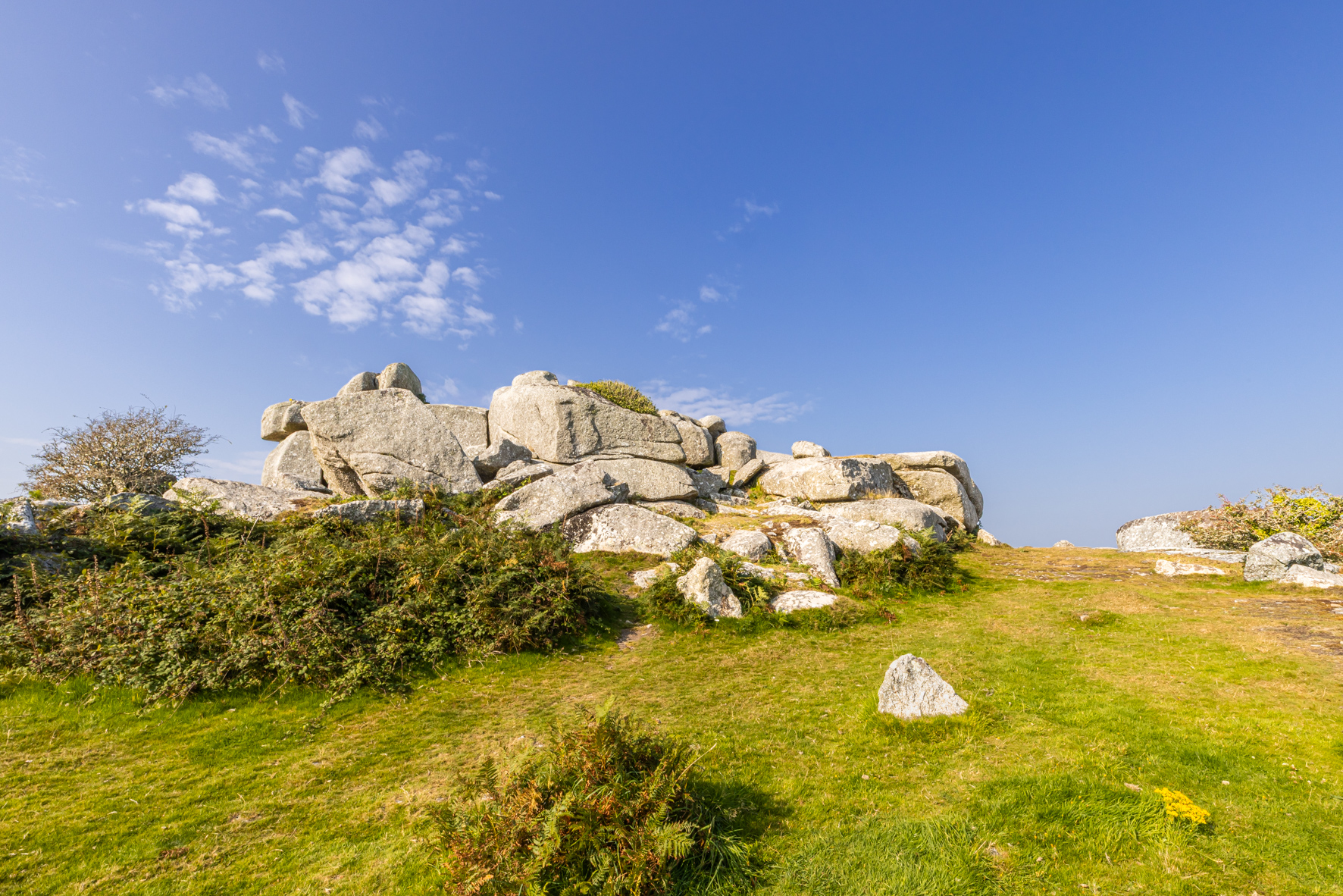
From afar, Helman Tor catches the eye of those walking the Saints’ Way. This striking granite tor, a hill whose summit is crowned by a free-standing rock formation, rises around 209 metres above the surrounding landscape and has watched over central Cornwall for centuries as a natural viewpoint. Those who make the short climb to its summit are rewarded with wide views across woodlands, heathland and rolling fields, a landscape that invites visitors to pause for a moment and quietly take in their surroundings.

Yet Helman Tor is much more than a scenic viewpoint. The hill tells a story that reaches back hundreds of millions of years. Its granite was formed deep beneath the Earth’s crust during the geological formation of South West England. Much later, wind, rain and frost gradually wore away the softer rocks, leaving the harder granite mass standing above the landscape as a natural tor. At the summit lie several large granite boulders, including so-called logan stones: heavy stones that can sometimes be moved slightly when touched at the right point.

Archaeologists have discovered remains of ancient enclosures, dwellings and field systems dating from the Neolithic period and the Bronze Age. This makes Helman Tor one of Cornwall’s oldest inhabited landscapes. Today, it forms part of an extensive nature reserve where heathland, wetlands and ancient woodland meet. For walkers following the Saints’ Way, it is easy to imagine that generations before us have looked out over this very same landscape.
Treffry Viaduct, a monument to Cornwall’s industrial heritag

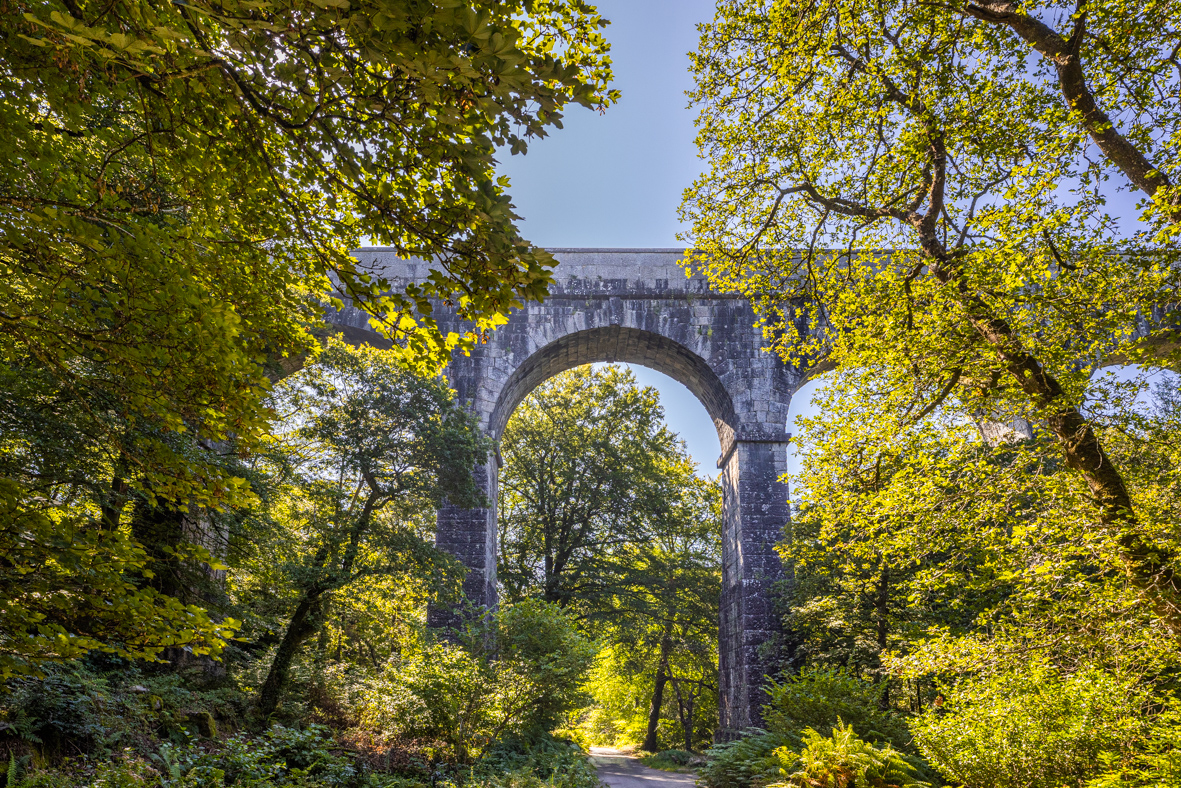
Hidden within the green Luxulyan Valley, an impressive structure suddenly appears between the trees. The Treffry Viaduct crosses the valley on ten elegant granite arches. For many walkers on the Saints’ Way, it is an unexpected encounter: a remarkable example of nineteenth-century engineering, concealed within a landscape otherwise defined by tranquillity and nature.

The viaduct was built between 1839 and 1842 on the initiative of Cornish entrepreneur Joseph Thomas Treffry. During the height of Cornwall’s mining industry, he was looking for an efficient way to transport copper ore, tin, granite and china clay from the inland mines and quarries to the harbour at Par. His solution was as ambitious as it was innovative.

The Treffry Viaduct was not simply a railway bridge for horse-drawn wagons. Built into the structure was also a water channel that powered a large waterwheel. This provided the energy needed to haul heavily loaded wagons up a steep incline. By combining railway and aqueduct in a single structure, Treffry created an engineering achievement that was almost unique in Britain.

With the arrival of steam locomotives, the system gradually lost its importance. The railway disappeared, but the viaduct survived. Today it forms part of the UNESCO World Heritage Site of the Cornish Mining Landscape and stands as a reminder of the era when Cornwall was internationally renowned for its mining industry and technological innovation.

Helman Tor and the Treffry Viaduct, two remarkable places along the Saints’ Way where nature, history and industry meet in a truly unique way.