St Ervan

An ancient harvest ritual

‘Crying the Neck’ is a quintessential Cornish harvest ritual, rooted in the agricultural communities of Cornwall from the time when grain was still cut by hand. The tradition carries a double meaning: gratitude and togetherness.

In the small community of St Ervan, I felt the layered richness of this ritual: the earthly and the spiritual, the folk celebration and the liturgy, the joy of the land and the gratitude of faith. As the final notes of the harvest hymn “Come, ye thankful people, come” faded, I realized I was no longer merely an outsider; for a moment, I had been part of a ceremony that bound land, faith, and community together.

The ritual of the last sheaf

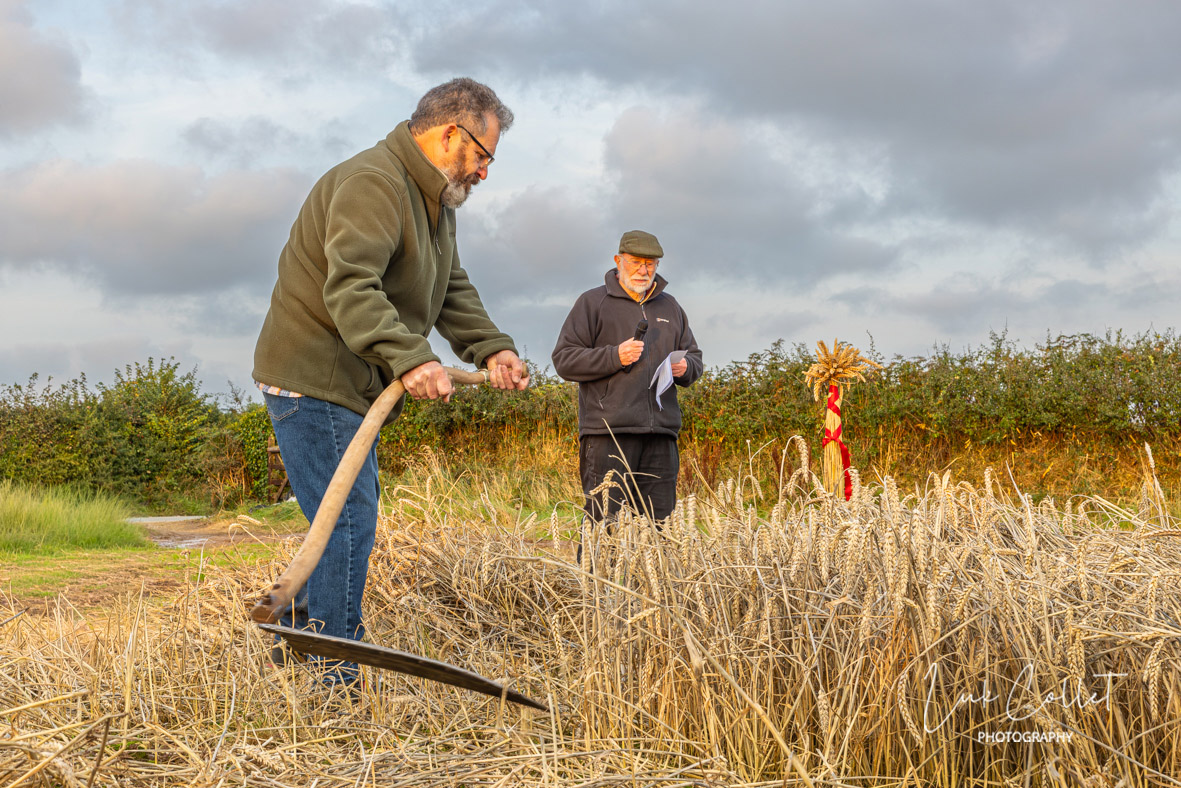
Crying the Neck is a typical Cornish harvest ritual with deep roots in the agricultural community of Cornwall, dating back to the time when grain was still harvested by hand. When the final sheaf of grain was cut from the field, it was regarded as a moment both special and sacred.

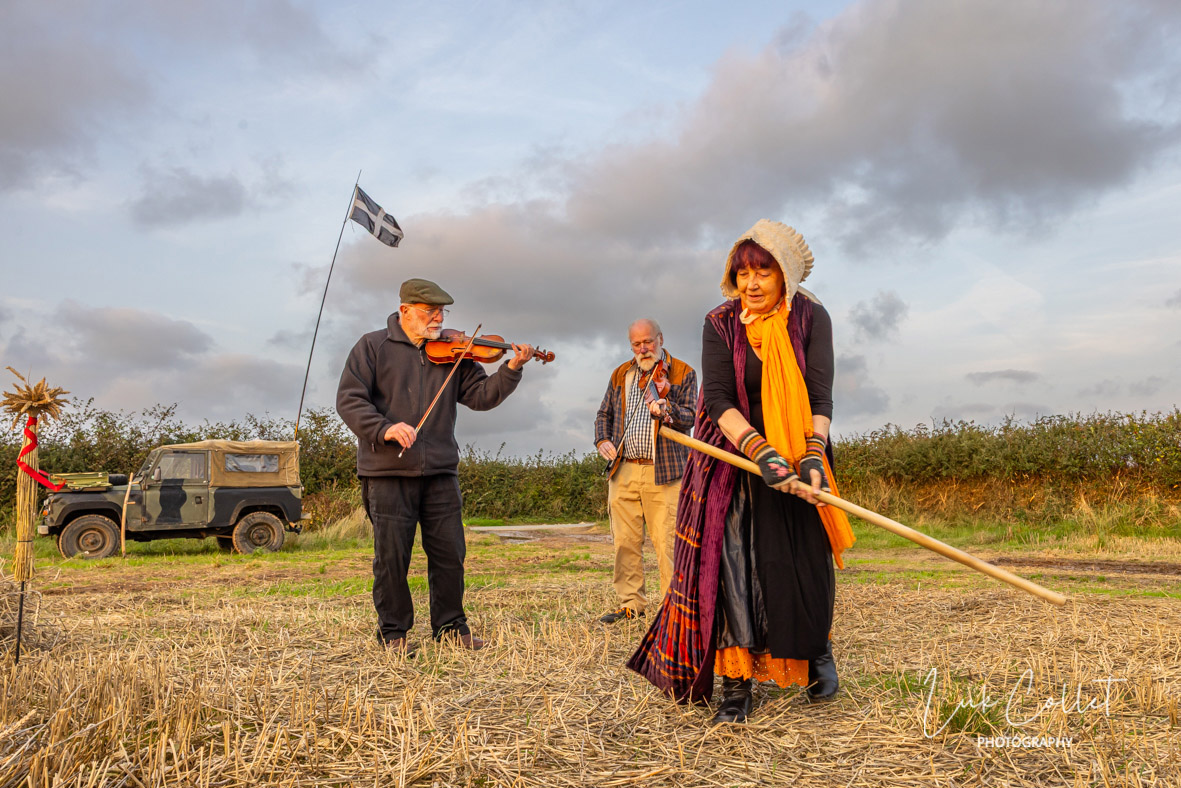
The “neck”, from the Old English hnæc = stem or stalk, referred to this last bundle of stalks that remained standing. Ritually lifted by the farmer or a field worker, it was presented to the community, sometimes to the accompaniment of traditional music and dance, marking the symbolic close of the harvest.

Traditionally, in the Cornish dialect, one cutter would call out:
“I 'ave 'un! I 'ave 'un! I 'ave 'un!”
to which the onlookers would respond:
“What 'ave 'ee? What 'ave 'ee? What 'ave 'ee?”
and the first would answer:
“A neck! A neck! A neck!”
to which the onlookers would respond:
Hurrah! Hurrah! Hurrah!
Gratitude in the fields

This tradition carries a double meaning: gratitude, the community giving thanks the earth and to God for the harvest, and togetherness, a social moment where farmers, neighbours, and families come together to celebrate the completion of their work.

From the 19th century onwards, Crying the Neck was often followed by a Harvest Thanksgiving Service in the church, with familiar harvest hymns such as “Come, ye thankful people, come”, one of the most beloved harvest hymns. In this way, an ancient almost pagan field ritual seamlessly intertwined with the Christian tradition of giving thanks. 

The evening in St Ervan concluded with a festive meal, drinks, and singing traditional songs together. As a pilgrim present by chance, I felt in that small local community centuries of tradition converge: the hard work of the land, the joy of a bountiful harvest, and the deep gratitude passed down from generation to generation. 

“Come, ye thankful people, come” hymn written by Rev Henry Alford in 1844

Additional information