St Agnes

Silent witnesses of Copper and Tin

Walking the coastal path, we find ourselves steeped in Cornwall’s industrial past, where copper and tin shaped both land and life. For centuries this rugged peninsula was bound to the earth’s hidden riches. As far back as the Bronze Age, tin was hewn from the rock, feeding a trade network that reached across the seas to the Mediterranean.

But even the deepest traditions are not immune to time. Global competition, falling prices, and the exhaustion of the richest seams finally brought an end to the mines. What had once sustained whole communities slowly fell silent.

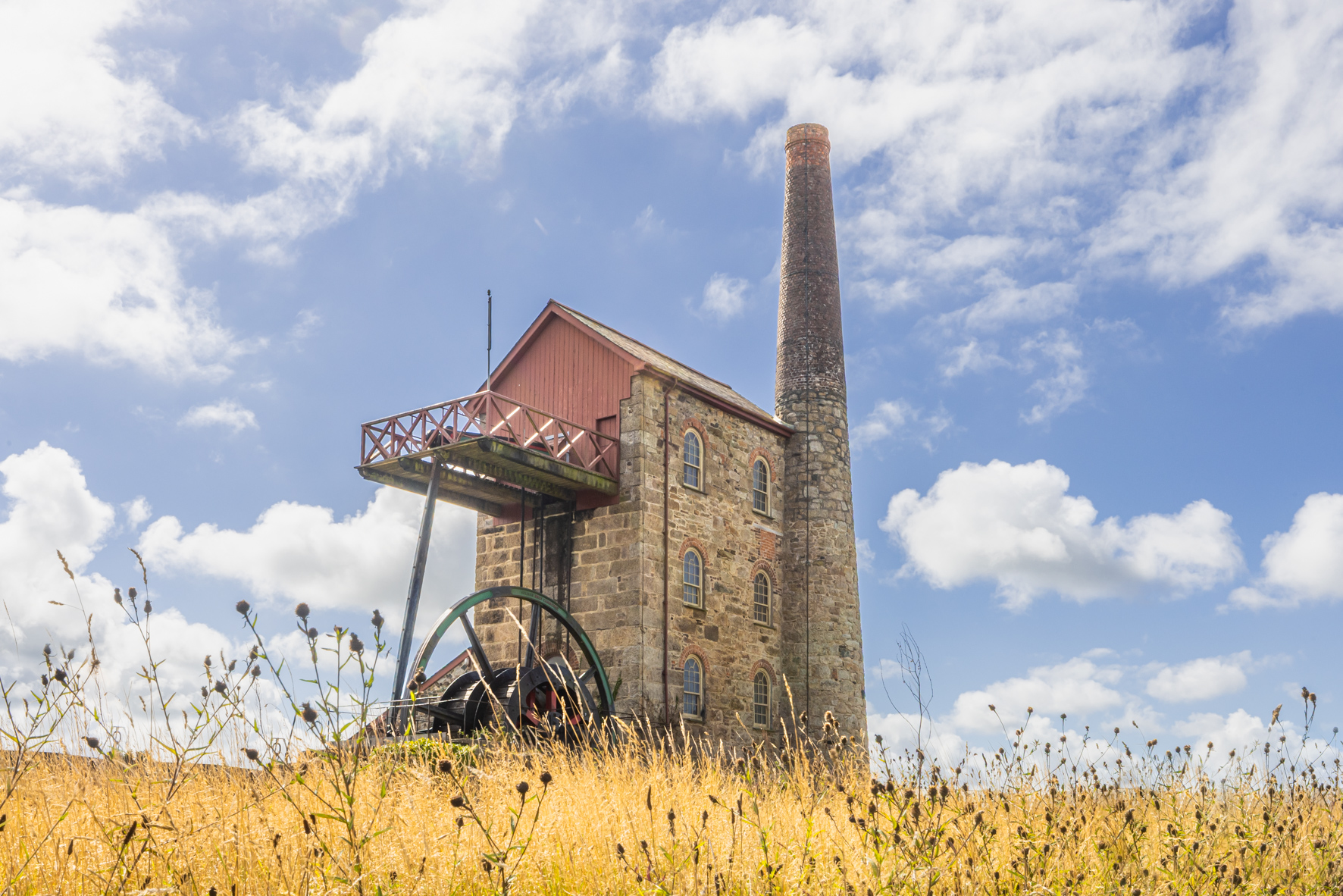
High on the cliffs between Porthtowan and St Agnes, the remains of Wheal Coates still stand as a haunting witness to that story. It’s one of the countless small tin mines that once dotted the landscape, now preserved by the National Trust as a site of cultural heritage.

Tin, Copper and the Making of Cornwall

Today, when you stand before the ruins of Wheal Coates, you are looking at what was once a nineteenth-century tin mine. Yet the story of Cornwall's mining heritage began thousands of years earlier.

As early as the Bronze Age, Cornish tin was a precious resource. Mixed with copper, it produced bronze – the metal from which tools, weapons and jewellery were made. Cornwall possessed exceptionally rich tin deposits. Recent research has shown that tin from Cornwall and neighbouring Devon reached the Mediterranean through long-distance trade routes thousands of years ago, linking this remote peninsula with the great civilisations of Europe.

During the eighteenth and nineteenth centuries, tin and copper mining reached its height. New steam-powered technology enabled miners to work ever deeper underground, and Cornwall became a world centre of mining expertise. When mining eventually declined and the mines closed, thousands of Cornish miners carried their skills, traditions and culture to every corner of the globe.

The ruins of Wheal Coates therefore tell the story of far more than a vanished industry. They bear witness to a landscape that helped shape the history of Europe for more than three thousand years.
The Taste of Cornwall

The traditional Cornish pasty was created as the perfect hearty meal for miners. Its thick pastry crust kept the filling warm while protecting it from dust, mud and even traces of metal that could cling to the miners' hands.

The distinctive crimped edge also served a practical purpose. Miners held the pasty by the crust while they ate. According to tradition, this edge was then discarded so that any contamination would not be eaten. Historians point out, however, that this story was probably not always true in practice. In times of hardship, few miners could afford to throw food away.

Traditionally, the filling consisted of beef, potato, swede and onion, seasoned simply with butter, salt and pepper. Today, the Cornish pasty has become Cornwall's best-known culinary symbol. What was once a simple meal eaten deep underground is now sold in countless varieties, from village bakeries to railway stations and airports.