Saint Germans

Saint Germans Priory, Gateway to the Cornish Celtic Way

On the banks of the River Tiddy lies the quiet village of St Germans. Here the Cornish Celtic Way begins, and not by chance: Saint Germans Priory carries a spiritual legacy that reaches back to the earliest centuries of Christianity in Cornwall.

By the early Middle Ages this was a place of prayer and community, dedicated to Saint Germanus of Auxerre. In the tenth century St Germans even became the seat of the Bishop of Cornwall.

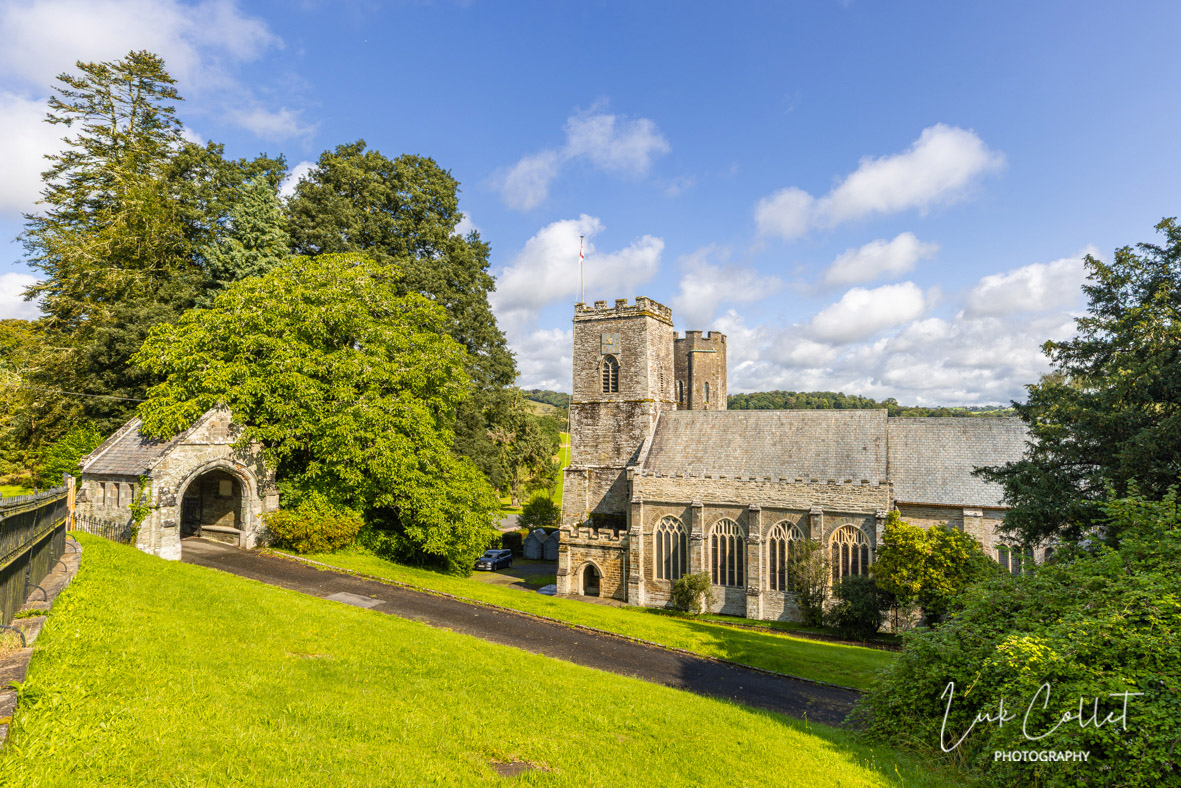
By stepping into the church you immediately sense something of that eternal grandeur. The twin Norman towers of the west front make it one of the most striking medieval buildings in Cornwall. Inside you find traces of Romanesque strength and Gothic grace, ancient tombstones and quiet corners where time seems to pause. To spend the night in this church at the beginning of my pilgrimage was a quietly remarkable experience.

Gateway to the Cornish Celtic Way

St Germans Priory, Stone as a Gateway

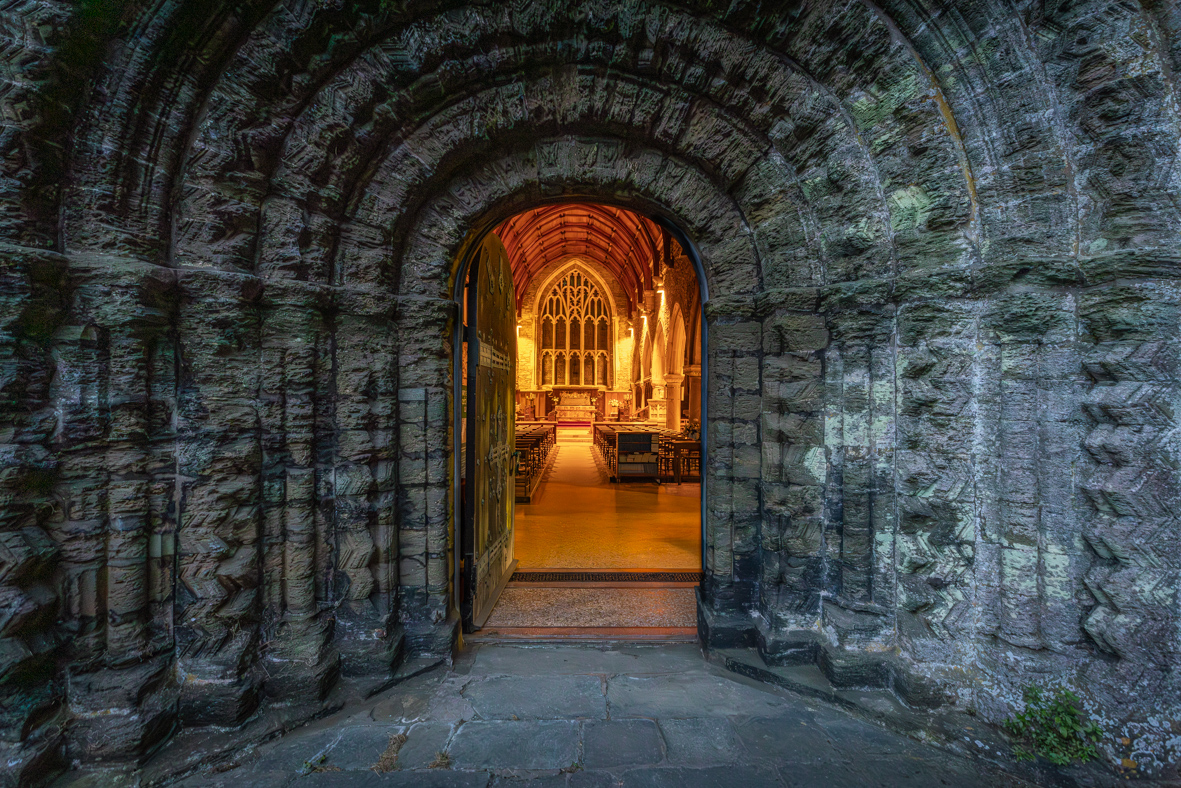
Before you even enter St Germans Priory, the west front immediately draws your attention. The two unequal towers are striking enough, but it is above all the monumental west doorway that remains in your memory. The Norman builders filled the entrance with deep arches and richly carved stonework, as if visitors were not simply entering a church, but stepping into another world.

Medieval churches had to be “read” by people who often could not read words. Their message was therefore not found in books, but carved in stone. The doorway was more than an entrance; it was a threshold between everyday life outside and the silence within.

When you step inside St Germans Priory, you are not simply entering a church. The building seems to carry many centuries layered upon one another. Long before the Normans built their impressive stone church here, this place was already an important religious centre. For a time, it even served as the seat of the bishops of Cornwall and became the spiritual heart of the region.

The history of Cornwall can almost be read directly from its stones: Saxon roots, Norman influence, medieval pilgrims, the dissolution of the monasteries, and finally a parish church that continued to live on. Perhaps that is what makes St Germans so special: it is neither a ruin nor a museum. It is a place that never truly ceased to be alive.
When Germanus crossed the Channel

When Bishop Germanus of Auxerre visited Britain in the fifth century, Cornwall did not yet exist as the county we know today. Roman rule had ended, new powers were emerging, and Christian communities were searching for their place in a changing world.

As so often in Cornwall, history and tradition lie closely intertwined. According to tradition, Germanus visited this place around 447. What is certain is that his memory lived on for centuries in the name of the village and the church.

Later, relics of Saint German were venerated here, and St Germans became a place where pilgrims stopped along their journey. Perhaps that is what makes the figure of this saint so typically Cornish: not only a historical person, but someone who continued to walk through stories and memories long after his earthly journey had ended. And sometimes those stories are so powerful that they give a landscape a new identity.

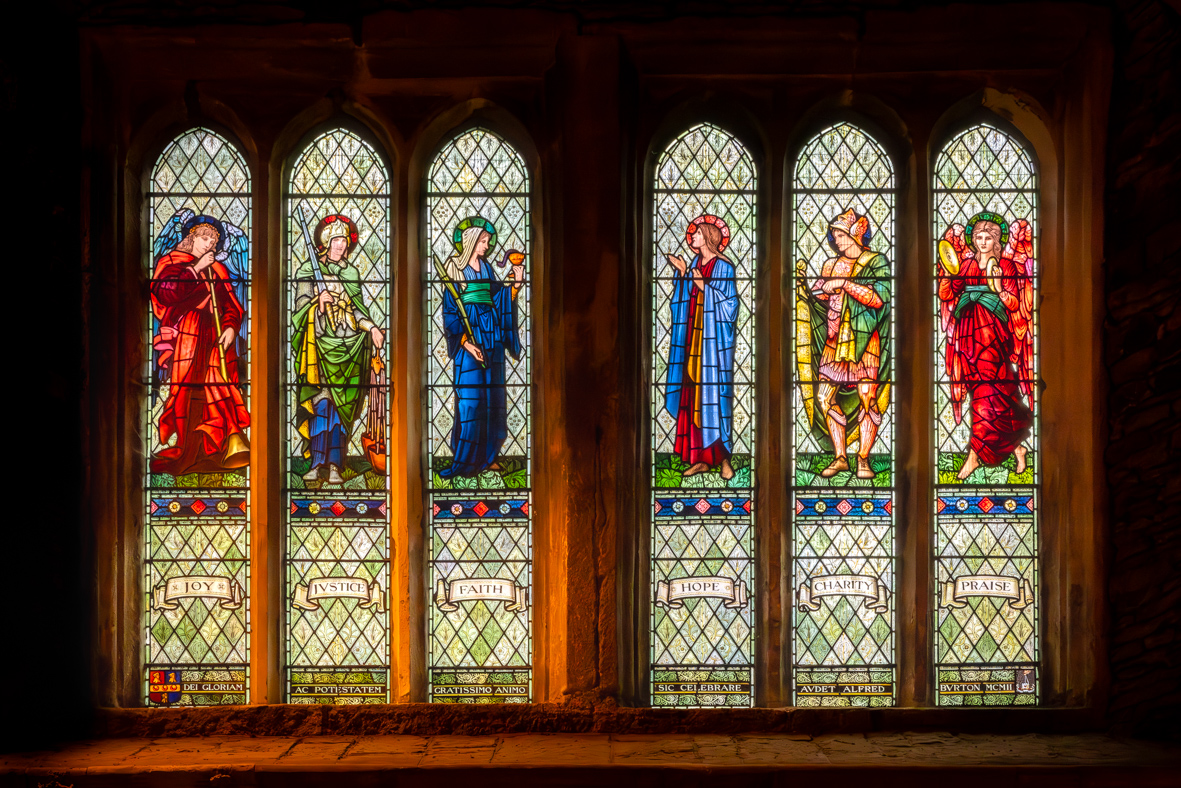
Six windows on being human

That evening, I was welcomed as a pilgrim guest in the Lady Chapel, directly opposite the great stained-glass window depicting six Christian virtues. When I awoke the following morning, my eyes immediately turned towards the six figures illuminated by the morning light.

Beneath these figures are six words deeply rooted in the Christian tradition: joy, justice, charity, praise, hope and faith. At first sight, they may seem like religious concepts from another age. Yet when we look more closely at this visual language, we discover that they remain surprisingly close to everyday life.

Together, these six words are not so much rules to follow, but rather ways of looking at life. Moreover, values such as justice, hope and charity have not remained exclusively Christian values throughout European history. They have also become part of a broader Western human tradition: ideas about fairness, compassion and human dignity that can be recognised beyond religious boundaries.

Before I put on my backpack again, I realised that a pilgrimage does not only begin with taking steps. Sometimes it begins by standing still in silence and looking at the light that enters through an ancient stained-glass window.

The Sound of Change

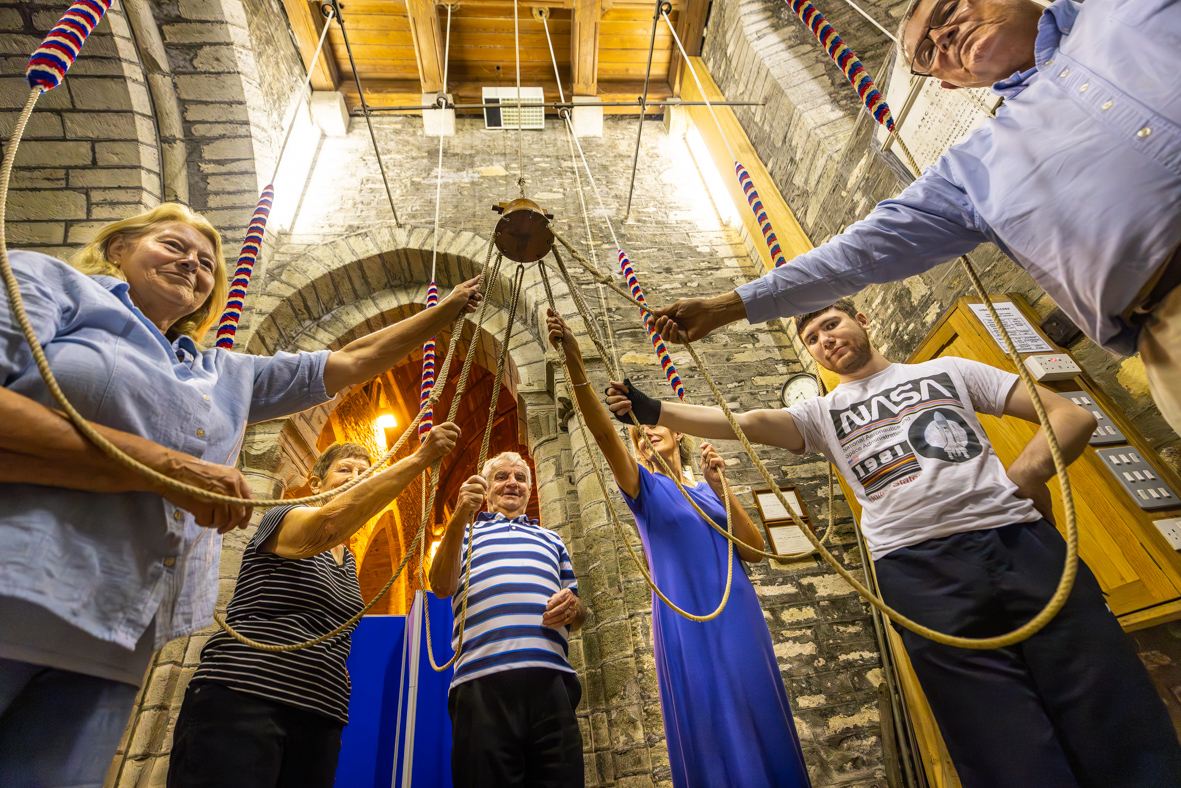
After two days of travelling, I arrived at St Germans Priory and heard a sound that seemed almost ceremonial, as if the church had noticed my arrival. From the tower came an unusual rhythm: not the solemn peal of church bells, but an apparently random sequence of tones. Only later did I discover that I had been listening to an old English tradition known as change ringing.

In change ringing, no melody is played. Each church bell has its own fixed pitch. The art lies in continually changing the order in which the bells sound according to carefully arranged patterns known as changes. Each bellringer controls a single bell and must ring it at precisely the right moment. It requires concentration, rhythm, teamwork and plenty of practice.

To a casual visitor it can sound almost chaotic, but behind the voices of these eight bells lay a remarkable sense of order. The bells did not need tuning; it was the people who tuned themselves to one another.

The photo shows the Bell Ringers of St Germans Priory in action.

Additional information