Grief is the price we pay for love

While walking the coastal path near St Agnes Head on 8 September 2022, I witnessed a sudden blaze of crimson sunlight breaking through heavy clouds over the restless sea. Moments later, my phone flashed the news: Her Majesty Queen Elizabeth II has died.

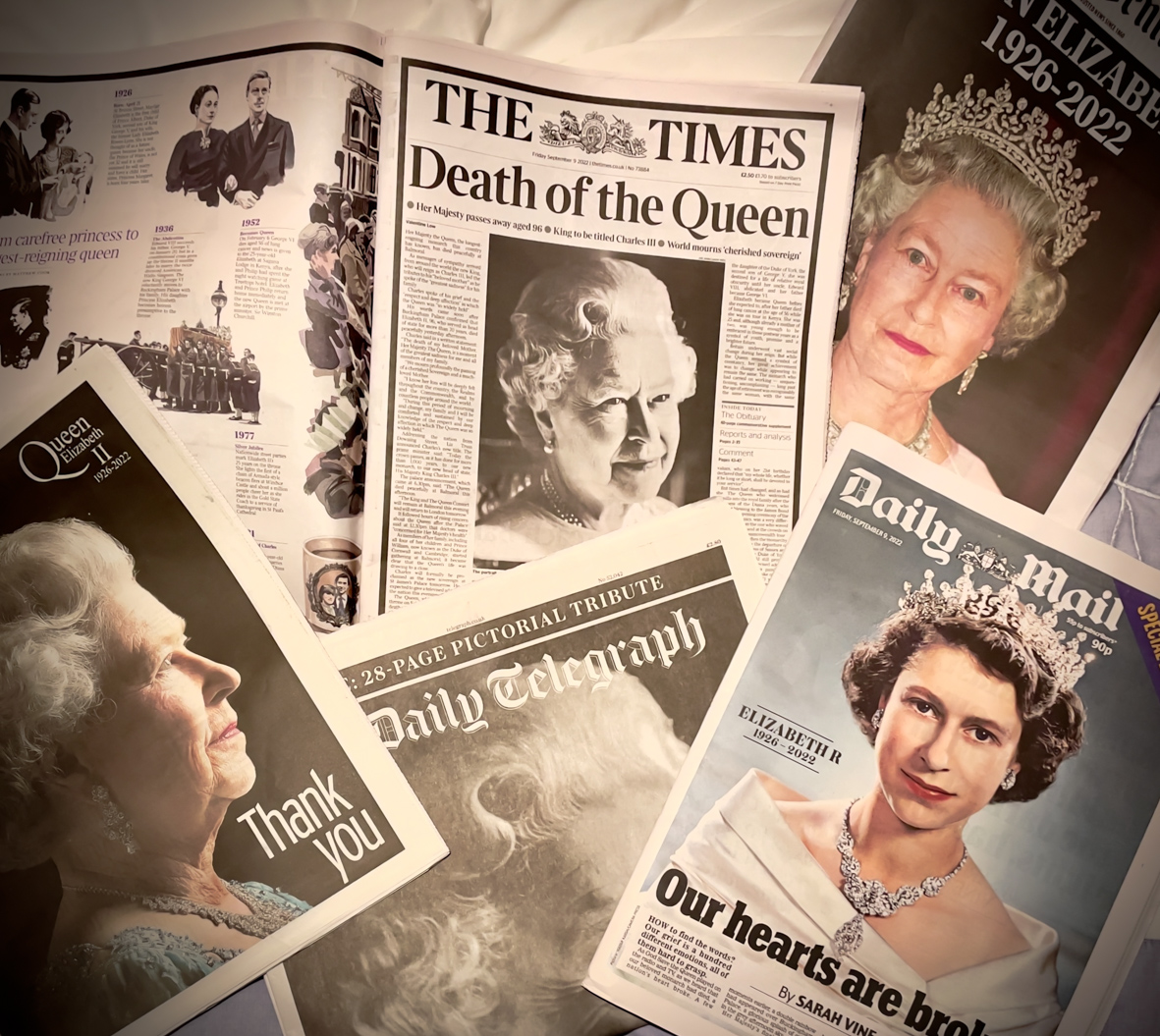
The next day, The Daily Telegraph carried the headline: “Grief is the price we pay for love.” Spoken by the Queen herself, it captured the essence of a nation’s emotion. It was the palpable result of a lifetime of connection, admiration and love shared by millions.

Two days later, in Portreath, I joined a service of thanksgiving where her favourite hymns, including “Praise, my soul, the King of heaven”, were sung. In that shared moment of music and memory, grief and gratitude came together, offering solace and reflection. For me, that hymn will forever echo.

The Passing of Queen Elizabeth II

On 8 September 2022, Queen Elizabeth II passed away. That very evening, it became clear how profoundly her death had touched the United Kingdom. The following morning, Britain's newspapers appeared with remarkably united front pages. From The Daily Telegraph to The Guardian, from The Times to The Daily Mirror, political differences seemed to fade for a moment.

Their headlines spoke the same language of respect, gratitude and shared remembrance. "Thank You", "A Life in Service", "Our Hearts Are Broken" and "Grief is the price we pay for love" captured the emotions of a nation bidding farewell to a Queen who had been part of everyday life for more than seventy years.

During those days I was almost 300 miles from London, walking in Cornwall. Yet the nation's grief was just as tangible there. In villages and churches, in conversations between walkers and local residents, I encountered the same quiet sense of loss and solidarity.

On 11 September, I attended a thanksgiving service in Portreath. It opened with Praise, my soul, the King of Heaven, one of the Queen's favourite hymns. At that moment, I understood what hymns can mean. They are more than church songs. They preserve a shared memory and give voice to feelings for which ordinary words are often insufficient. They unite people across generations, especially when words fail.
"Grief is the price we pay for love"

When The Daily Telegraph published the headline "Grief is the price we pay for love" on its front page on 9 September 2022, it perfectly captured the nation's collective emotion. The words were not the newspaper's own. They had been spoken by Queen Elizabeth II herself. In September 2001, shortly after the terrorist attacks in the United States, she used this phrase in a message of sympathy to the bereaved.

Its power lies in its simplicity. Grief is the inevitable consequence of deep human attachment. To love someone, the Queen suggested, is also to accept the possibility of mourning.

By placing these words on its front page, the newspaper reminded its readers that grief reflects not only loss, but also the depth of love and appreciation that came before it. It was, at the same time, a message of consolation: grief is not a sign of weakness, but of the profound bond the Queen had forged with her people.

“Praise, my soul, the King of heaven”