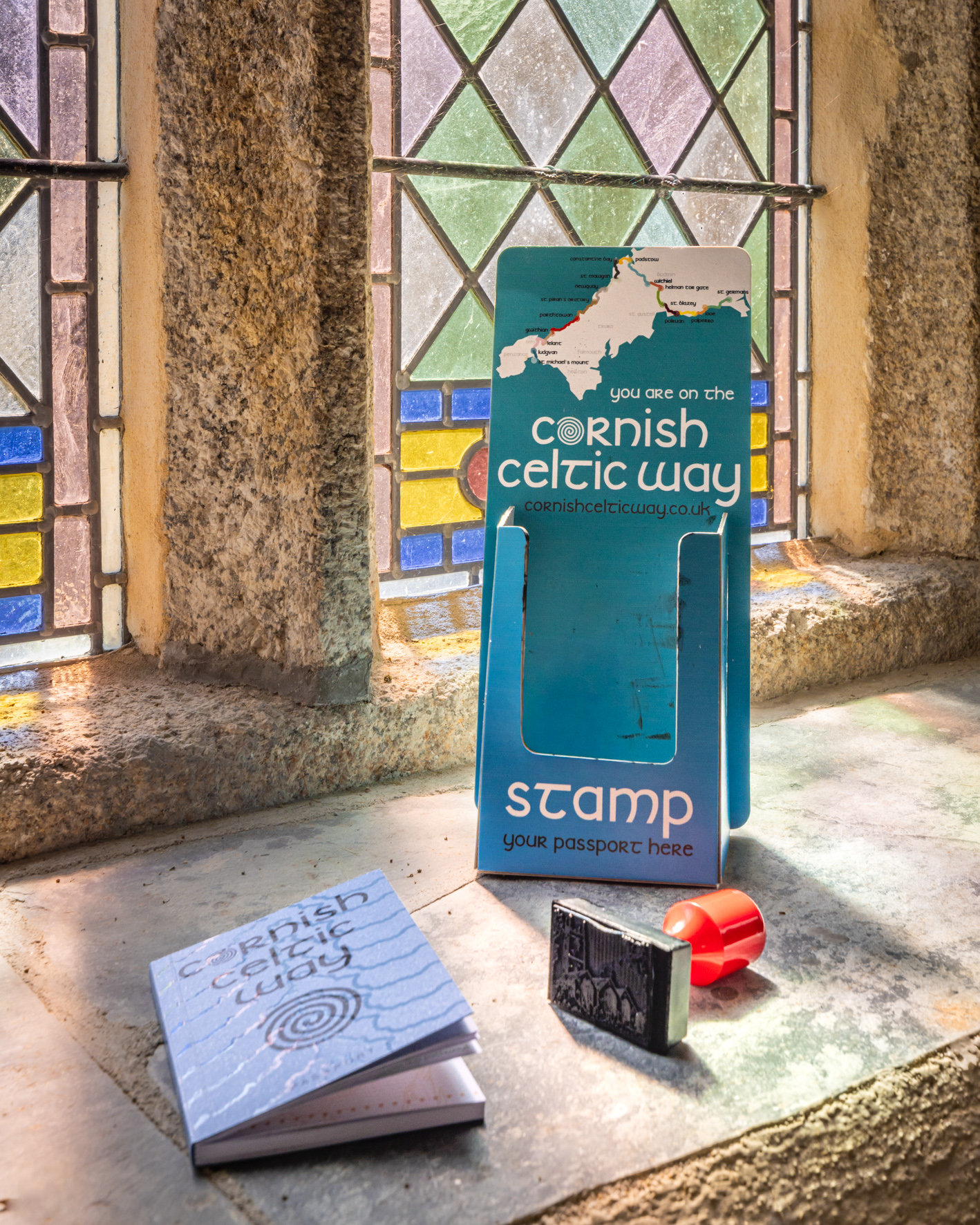
Les petits rituels le long du chemin

En chemin, la marche n’est qu’une partie du voyage ; la collecte des tampons en fait également partie. Dans les églises et les petites boutiques, on appose une marque dans son passeport de pèlerin. C’est un petit rituel qui clôt la journée et marque la transition vers l’étape suivante. Chaque tampon raconte sa propre histoire. Il ressemble à une récompense pour l’effort nécessaire afin de parcourir ces plus de 200 km.

Pour ceux qui cherchent du repos en chemin, il y a plus qu’un simple lit. Les églises et maisons paroissiales ouvrent leurs portes aux pèlerins inscrits à l’avance avec leur passeport. Dormir entre les colonnes et les vitraux n’est pas une nuit ordinaire. Ici, le temps ne vous appartient pas, mais appartient au lieu lui-même. C’est une expérience particulière, un moment de réflexion où l’on redécouvre non seulement le chemin, mais aussi soi-même.

Sleeping under sacred roofs

On the Cornish Celtic Way, the pilgrim is not only a traveller but also a guest within an ancient tradition of Cornish hospitality. Pilgrims who obtain a Cornish Celtic Way passport receive a list of churches, church halls and other sacred sites where they may stay overnight, provided they register in advance.

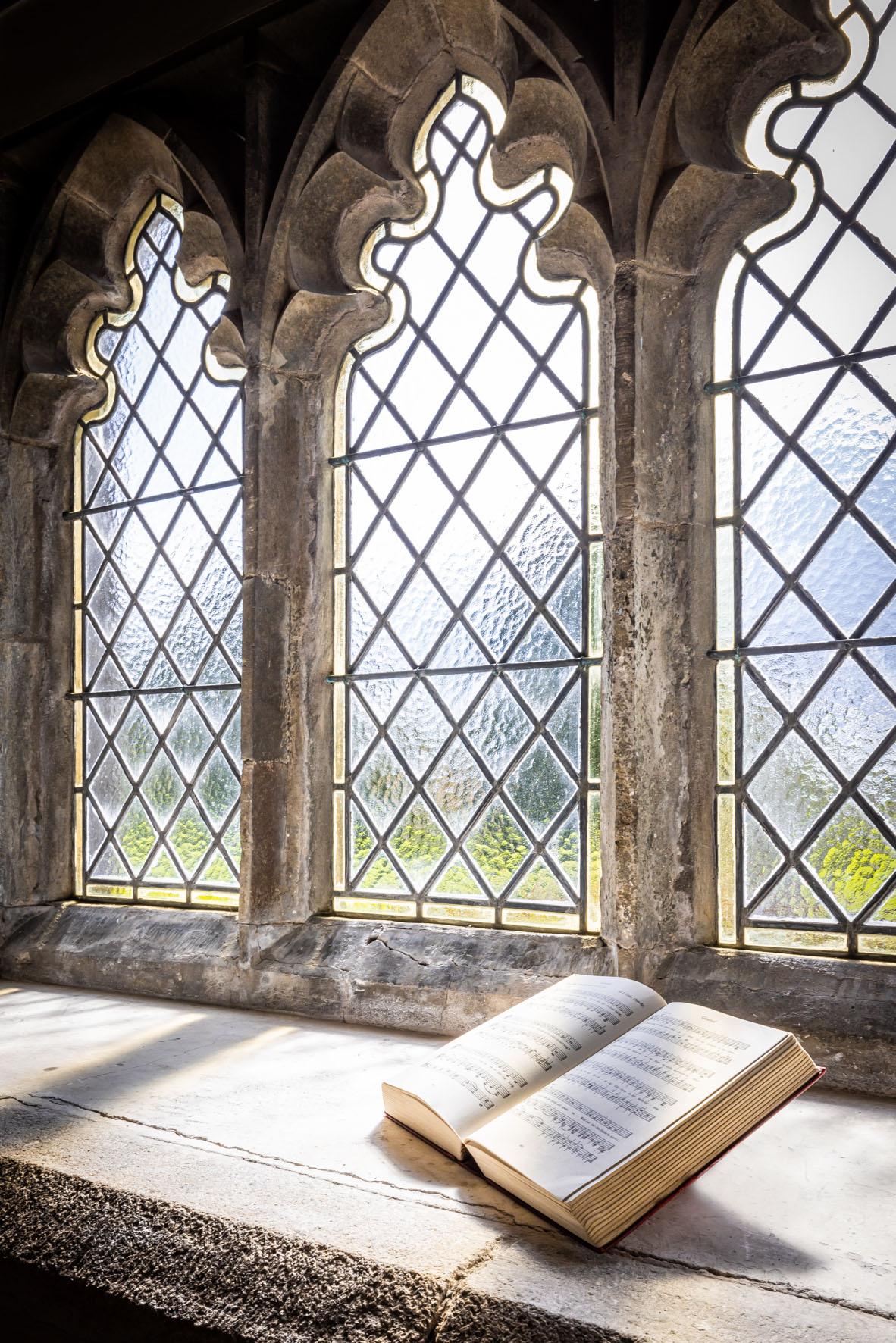
This is not merely about finding a place to sleep. Sleeping in churches, one becomes aware of an enduring presence, a sacred silence between pillars and stained-glass windows. Time is no longer something you own, but something the place holds. And you are invited to become part of something larger. It is an invitation to slow down, breathe, reflect and enter the quiet that seems to linger within these walls.

A church always invites us to slow down and to marvel, to embrace silence, gratitude, reflection or prayer – or simply to pause for a moment and experience the sense of peace that seems to dwell within these ancient walls.

Many churches are, of course, impressive historical monuments. Yet what makes these places along the way so special goes beyond that. It is the open atmosphere of stillness and connectedness that touched me deeply.

In the stage entitled Churches are open places of silence, I reflect further on what makes these places so special to me. You will find the link below.
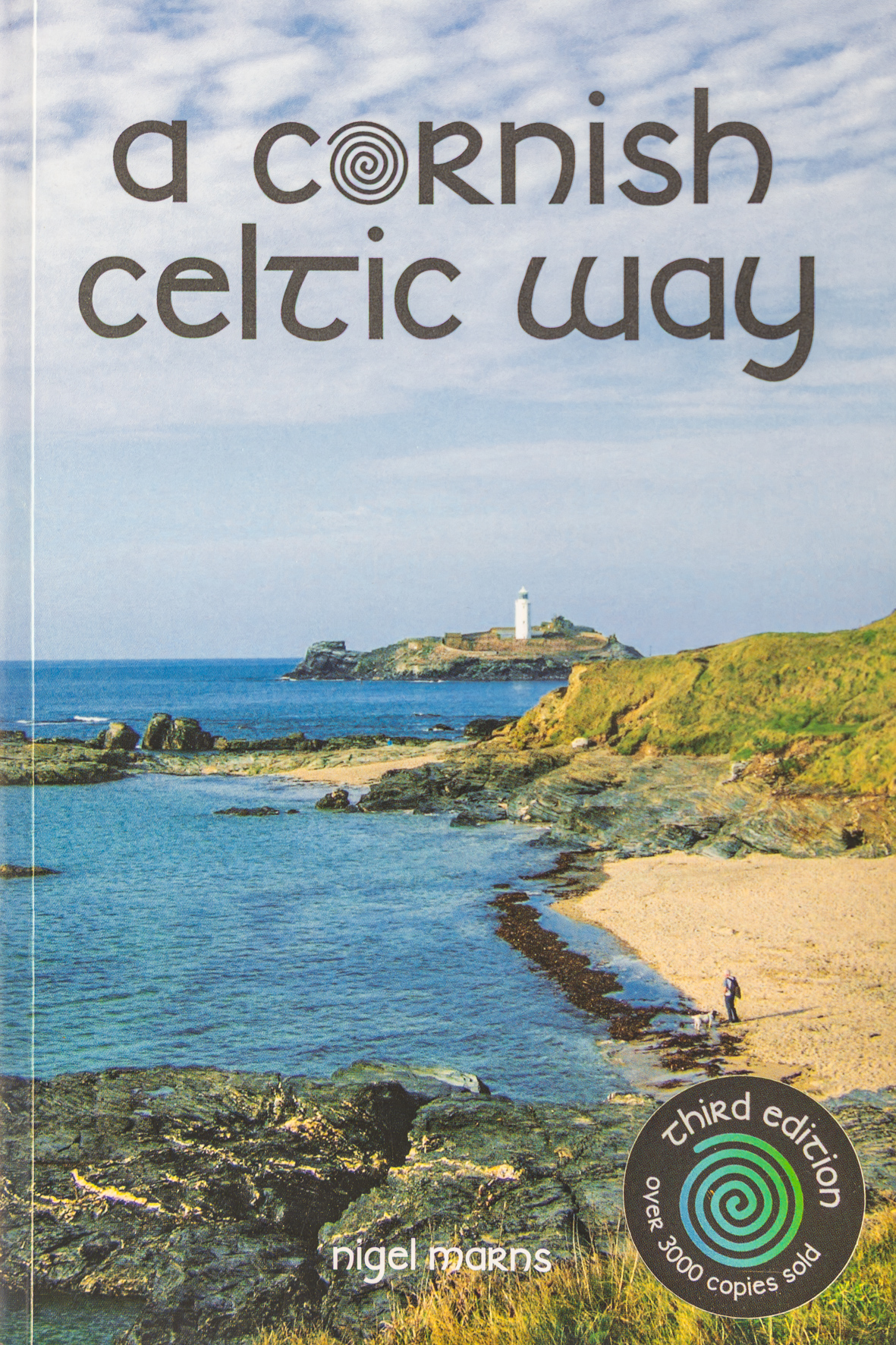
Cornish Celtic Way book

This book is your guide on the way with detailed maps and directions for each section of this Cornish Celtic Way. With songs, poems, prose and prompts – be inspired, question and explore your own spirituality through an authentic outdoor journey and experience. The book is a guidebook and handbook designed to accompany you on the Cornish Celtic Way and to inspire your pilgrim journey.

Each chapter contains the following sections detailed below. These are provided as a set of tools to help as you set about your walk and pilgrimage. Use these in a way that works for you: choose to use all of the sections, or just focus on a few.

Maps and directions practical tools to navigate the route. For each map there is an estimated time and mileage, based on an average walking pace of 2.7 miles per hour. The scale of the maps are shown by the 1km blue grid sqaures and each walk has been given a grading of easy, moderate or challenging. You may choose to supplement these maps with OS maps, as I have done during my journey.
Information on saints and places tell the story of places along the route, the history of the Cornish Celtic saints and their influence and heritage in the landscape.
Action to encourage you to have a physical interaction with things you may experience along the route.
Questions are to prompt thoughts and reflections as you walk.
Christian references extracts from Christian texts and the Bible relate to the theme of the chapter and provide a focus and Christian grounding to inspire you on your pilgrimage. 
Personal reflection comments from the author's experiences when walking the route.

More info and ordering the Cornish Celtic Way book and the passport: https://www.cornishcelticway.co.uk


Cornish Celtic Way passport

And then there are the stamps. Along the route, churches, cafes, and local shops and offices hold ink stamps to use in the Cornish Celtic Way passport. For many, they are a reward, a sign of perseverance, a small ritual marking the stages of the journey and pointing toward what follows. More than a souvenir, each stamp is a symbolic echo of the endurance required to complete the Cornish Celtic Way.

The Cornish Celtic Way Passport has been designed and printed to accompany you on the Cornish Celtic Way not only for collecting the ink stamps along the route, but also to give you access to budget accommodation in atmospheric churches, church halls with more facilities and some B&Bs too. 

Each walker will need to have a Cornish Celtic Way passport  with them as well as a sleeping bag and mat as you will be sleeping on the floor in the churches and halls. The churches and halls do not show booking contact details for their accommodation. These contact details are printed in the ‘Accommodation List’ that is sent out to passport holders. 

More info and ordering the Cornish Celtic Way book and the passport: https://www.cornishcelticway.co.uk

As a pilgrim, besides the Cornish Celtic Way guidebook and pilgrim passport, I also carried handy Ordnance Survey (OS) maps and the pilgrim passport for the journey to Santiago de Compostela, known as the Credencial del Peregrino.

Informations complémentaires